Best cross-chain crypto swaps 2026
Cross-chain swap services compared by architecture (intent-based vs bridge), supported chains, custody, slippage, settlement speed, and account requirement.
Cross-chain swaps in 2026 split into three architectures: bridge-based, DEX-aggregator widgets, and intent-based routing. The third category is where the action is.
This ranks the eight cross-chain swap services worth using right now, weighted by what users actually feel: route depth, settlement speed, custody, and how much UX friction sits between your wallet and the destination asset.
For the architectural primer, read Cross-chain swaps explained.
How we ranked
Six criteria:
| Criterion | Why |
|---|---|
| Architecture | Bridge / aggregator / intent-based. Bridge has worse security history. |
| Number of chains supported | Coverage matters most when you’re moving exotic assets. |
| Custody model | Non-custodial routing > custodial settlement. |
| Account / wallet-connect required? | Friction kills the use case for one-off trades. |
| Settlement speed | Source-chain block time bound, but routing overhead varies. |
| Recovery when something goes wrong | Self-serve > support ticket. |
The ranking
1. uSwap
Architecture: Intent-based, deposit-address model. 0% platform fee.
Chains: 30+ including BTC (mainnet + Lightning), XMR, ETH (L1 + L2s — Arbitrum, Optimism, Base, Polygon, zkSync), Solana, BNB, Avalanche, NEAR, TON, TRON, Cosmos, Polkadot, Cardano.
Custody: Non-custodial routing. Funds touch a routing wallet only long enough to trigger settlement at a partner DEX.
Account: None. Lifetime deposit address per asset. No wallet-connect.
Settlement: 1-5 min for L2/stablecoin pairs. 15-45 min when one leg is BTC mainnet.
Recovery: Self-serve. Re-quote, redirect, refund — exposed in the same UI.
Trade-off: Smaller chain list than Rango/Li.Fi (30+ vs 70+). Coverage of the major chains is complete; long-tail/L3 chains aren’t all there yet.
2. Rango Exchange
Architecture: Intent-based DEX aggregator. Wallet-connect.
Chains: 70+. Best coverage for exotic and L3 chains.
Custody: Non-custodial. Wallet signs each leg.
Account: None, but requires wallet-connect (MetaMask / Phantom / etc.) on every trade.
Settlement: Comparable to uSwap when comparing the same pair.
Recovery: Wallet-side. If a swap stalls mid-route, the user has to re-initiate; protocol-level dispute mechanisms vary by underlying DEX.
Trade-off: Best chain coverage in the list. UX friction higher because of per-trade wallet-connect. Also non-zero platform fee (~0.1-0.3% baked into routes).
3. Jumper Exchange (powered by Li.Fi)
Architecture: Intent-based aggregator over Li.Fi’s solver network.
Chains: 30+.
Custody: Non-custodial.
Account: Wallet-connect.
Settlement: Fast.
Recovery: Wallet-side.
Trade-off: Strong EVM coverage. Weaker for non-EVM (BTC, XMR, Cosmos, etc. either missing or proxied through bridges).
4. Squid Router
Architecture: Intent-based, built atop Axelar’s interchain message protocol.
Chains: 25+. Strong on Cosmos + EVM.
Custody: Non-custodial.
Account: Wallet-connect.
Settlement: Fast.
Recovery: Limited self-serve; protocol-level for stuck Axelar messages.
Trade-off: Best in class for Cosmos-aware trades. Otherwise mid-pack.
5. Across Protocol
Architecture: Intent-based, optimistic. Solver network for EVM↔EVM.
Chains: EVM-only (mainnet + most major L2s).
Custody: Non-custodial.
Account: Wallet-connect.
Settlement: Among the fastest in the EVM corridor — sub-30s on hot lanes.
Recovery: Optimistic dispute mechanism.
Trade-off: EVM-only is a hard cap. Best speed if your trade is EVM↔EVM, useless otherwise.
6. ChangeNOW
Architecture: Custodial swap aggregator. Has cross-chain pair coverage but the architecture is centralized.
Chains: 70+.
Custody: Custodial settlement window.
Account: None, but compliance flagging applies.
Settlement: Fast.
Recovery: Support ticket.
Trade-off: Best non-EVM exotic coverage. Worst architecture in the list.
7. SimpleSwap
Architecture: Custodial.
Chains: ~60.
Custody: Custodial settlement window.
Account: None.
Settlement: Fast.
Recovery: Support ticket.
Trade-off: Legacy UI. Functionally similar to ChangeNOW.
8. Bridges (Stargate, Hop, Connext)
Architecture: Token bridges, not swaps. You get a wrapped representation, not native asset on the destination.
Chains: EVM-focused mainly.
Custody: Smart contract.
Account: Wallet-connect.
Settlement: Variable.
Recovery: Protocol-level.
Trade-off: Use only when you specifically want a wrapped token. For most users, “cross-chain swap” is what’s actually wanted, and bridges are the wrong tool.
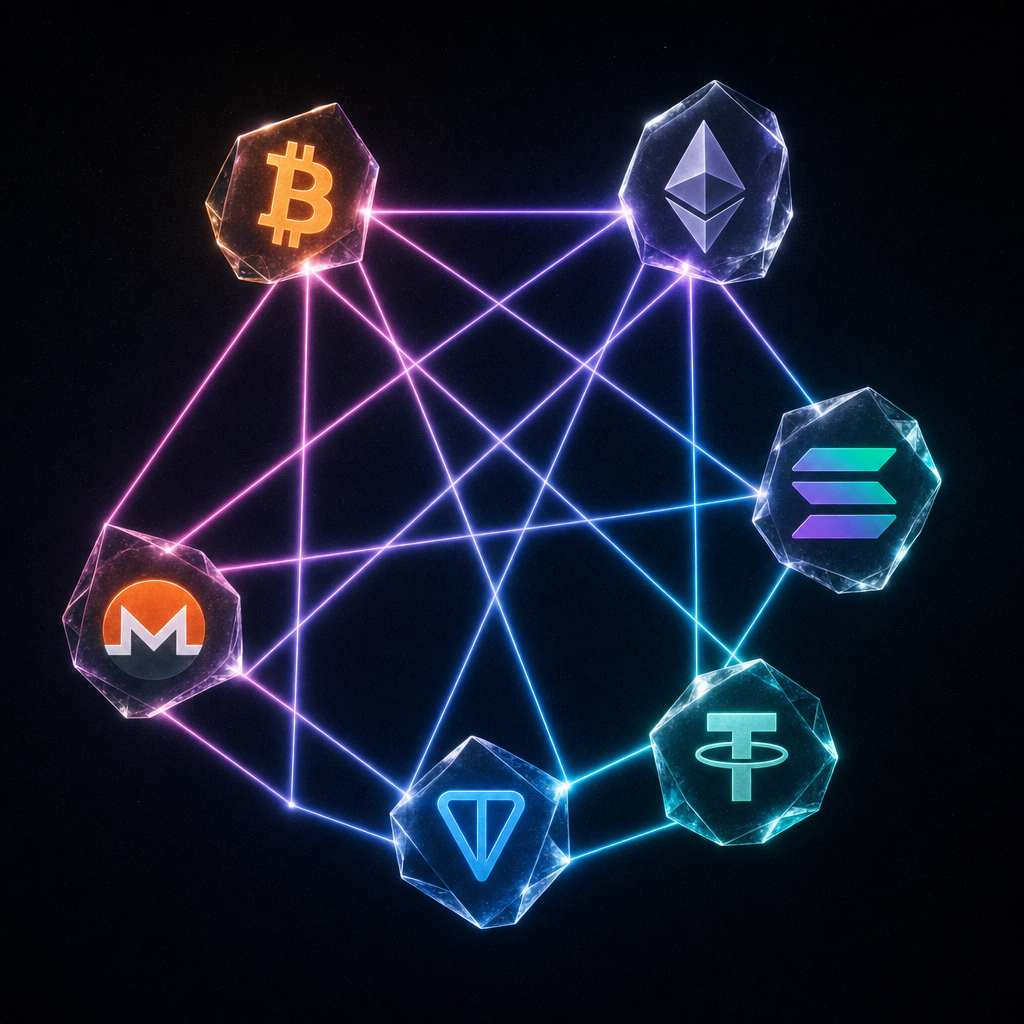
Side-by-side
| Service | Architecture | Chains | Custody | Wallet-connect? | Fee |
|---|---|---|---|---|---|
| uSwap | Intent + deposit-address | 30+ (BTC, XMR, ETH, SOL, more) | Non-custodial | No | 0% platform |
| Rango | Intent (DEX aggr) | 70+ | Non-custodial | Yes | ~0.1-0.3% |
| Jumper / Li.Fi | Intent (EVM-strong) | 30+ EVM-heavy | Non-custodial | Yes | ~0.1-0.3% |
| Squid | Intent (Cosmos+EVM) | 25+ | Non-custodial | Yes | ~0.1-0.3% |
| Across | Intent (EVM-only) | EVM only | Non-custodial | Yes | ~0.05-0.2% |
| ChangeNOW | Custodial aggr | 70+ | Custodial settlement | No | ~0.4-1% spread |
| SimpleSwap | Custodial | ~60 | Custodial settlement | No | ~0.4-1% spread |
| Bridges | Wrapped-token bridges | Varies | Smart contract | Yes | Per-bridge |
What to pick when
- You want zero friction (no wallet-connect, no account) AND non-custodial routing. uSwap is the only option that pairs both. Use the lifetime deposit address.
- You’re trading a long-tail / new L3 chain we don’t cover yet. Rango. Accept the wallet-connect friction.
- You’re moving EVM↔EVM fast on a hot lane. Across is the speed leader.
- You hold and trade in Cosmos. Squid is purpose-built.
- You need a wrapped token specifically. Bridge directly (Stargate / Connext). Otherwise prefer a swap.
Three things people get wrong about cross-chain
Conflating bridges with swaps. “I want to bridge USDC from Ethereum to Solana” almost always means “I want native USDC on Solana.” That’s a swap (sell USDC-ERC20 → USDC-SPL), not a bridge (mint a wrapped representation). Pick the right tool: a swap. See Cross-chain swaps explained.
Forgetting source-chain block time. When the source is Bitcoin or Monero, the slowest part is the source confirmation, not the routing. Fast cross-chain marketing copy doesn’t change BTC’s 10-min average block time.
Optimizing for chains instead of routes. “Supports 70 chains” doesn’t mean every pair is well-routed. Quote your actual pair, both directions, against multiple services. The right answer depends on the day’s depth, not the brochure.
For the full intent-based primer: Cross-chain swaps explained. For the no-KYC angle specifically: Best no-KYC crypto exchanges 2026.
More from the blog
Cross-chain swaps explained: how intent-based routing works
A practical explainer of intent-based cross-chain swaps — what gets sent where, how the route is decided, and where the failure modes hide.
Read
Pay Mullvad VPN in Monero (the privacy-first stack)
Mullvad sells VPN time for cash-by-mail. uSwap is the digital equivalent — pay in Monero, BTC, or any crypto, and uSwap routes to XMR and credits your 16-digit Mullvad account number.
Read
Buy Telegram Premium with crypto (no TON wallet required)
Telegram's official storefront is TON-only. uSwap takes any crypto you hold — BTC, XMR, ETH, USDT, SOL — and credits Premium to your @username directly.
Read